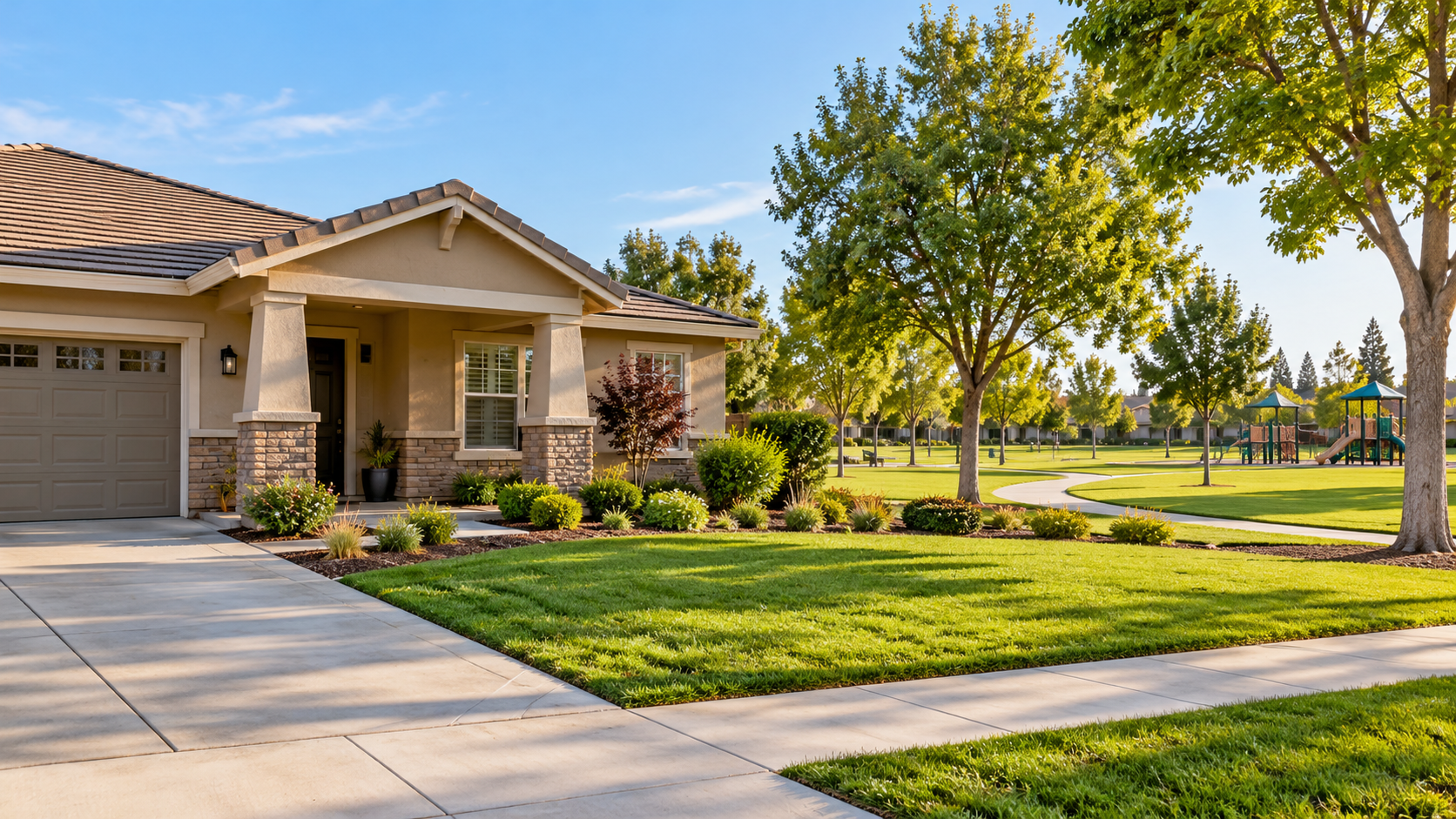
Living near downtown Hanford, CA, can appeal to homebuyers who want to be close to local businesses, community activities, and the city’s historic character. Located in Kings County in California’s Central Valley, Hanford offers a range of residential settings, including homes within reach of its downtown area. For buyers comparing neighborhoods, understanding the advantages and trade-offs of living near downtown can help determine whether the location fits their everyday routines, budget, and long-term plans.
Downtown living means different things to different households. Some buyers value the ability to reach shops, restaurants, and community destinations with a relatively short trip. Others prioritize a quieter residential setting, a larger yard, additional parking, or a home farther from commercial activity. A property’s exact location can make a substantial difference, even when two homes are described as being near downtown Hanford.
The area’s historic identity is also part of its appeal. Places such as China Alley reflect Hanford’s cultural history and offer a point of interest for residents exploring the city’s past. At the same time, buyers should evaluate a home based on practical considerations such as condition, maintenance, street activity, commute routes, insurance, and the costs of ownership.
This guide explores what to consider when living near downtown Hanford, including housing choices, local character, everyday amenities, and questions to ask before making an offer.
What to Know About Housing Near Downtown Hanford, CA
One of the first steps in deciding whether downtown Hanford is right for you is understanding the variety of homes and residential settings in the area. Rather than assuming every property near downtown has the same features, evaluate each home individually and compare its condition, layout, location, and overall cost.
Explore the range of housing options
Depending on the particular street and property, buyers may encounter older homes, updated residences, smaller lots, and properties with different architectural styles. The age and condition of a home can influence both its character and its ongoing maintenance requirements.
An older home may offer details that appeal to buyers who appreciate established architecture, distinctive layouts, or mature landscaping. However, the age of a property alone does not establish its condition. A home that has been maintained and updated may have very different needs from a similar-looking property with deferred maintenance.
When touring homes, consider:
- The condition of the roof, plumbing, electrical systems, and heating and cooling equipment.
- Whether the layout suits your household’s daily routines.
- The amount of storage and usable outdoor space.
- The condition of windows, doors, flooring, and other visible features.
- The availability and configuration of parking.
- Any visible signs of water intrusion, settlement, or other concerns that warrant further investigation.
A qualified home inspector can help identify issues that may not be apparent during a showing. If the inspection raises specialized concerns, you may need additional evaluations from qualified contractors or other professionals.
Understand the trade-offs of older homes
Older homes can have distinctive appeal, but buyers should budget realistically for ownership. Some properties may have been extensively renovated, while others may require updates over time.
Before making an offer, ask what is known about major systems and improvements. Request available permits, invoices, warranties, and maintenance records where appropriate. If a feature was added or remodeled, do not assume the work was completed to current requirements simply because it looks finished.
It is also useful to distinguish between cosmetic preferences and material property concerns. Paint colors, cabinet finishes, and landscaping can often be changed gradually. Problems involving structural components, major systems, moisture, or safety may require more substantial work.
Your decision should account for both the purchase price and the potential cost of ownership. A home that appears affordable initially may require a larger maintenance budget than a comparable property in better condition.
Compare lot size, parking, and privacy
Buyers who want to live near downtown should pay close attention to the relationship between the home and the surrounding street.
Some properties may have more limited outdoor space or different parking arrangements than homes in other residential settings. If you have multiple vehicles, frequently host guests, own recreational equipment, or need room for pets, check whether the property meets those needs.
Walk the lot and inspect how the outdoor space is arranged. Consider where you would store equipment, relax outside, or create a play area. Look at neighboring structures, fencing, windows, and the distance between outdoor living spaces.
Privacy is not determined by location alone. A well-designed property may provide a comfortable sense of separation even in a more established neighborhood, while another home may offer less privacy because of its layout or nearby activity.
Review the property’s specific location
“Near downtown Hanford” can describe different distances and street environments. A home close to a commercial area may have a different experience from a property on a quieter residential street a little farther away.
Visit the property at more than one time of day when possible. Observe traffic, street parking, lighting, noise, and general activity. If you are particularly sensitive to noise, pay attention to sounds inside the home as well as outdoors.
Check the routes you would use for work, shopping, appointments, and other regular activities. A property that looks convenient on a map may feel different when you test the actual route during your usual travel time.
Finally, review the boundaries and details of the specific property rather than relying only on a neighborhood label. The home’s location, condition, and fit for your needs should guide the decision.
Downtown Hanford’s Historic Character, China Alley, and Community Life
Hanford’s downtown area is part of the city’s identity, and its historic places can add interest for residents who enjoy learning about the community where they live. However, proximity to a historic destination is only one consideration in choosing a home.
Learn about historic China Alley
China Alley is a historic area associated with Hanford’s Chinese American community and the city’s past. It offers a way to explore an important part of local history and understand how different communities have contributed to the area’s development.
For homebuyers, historic places can add context to the surrounding community. Some people enjoy having cultural and historical destinations nearby, while others may simply appreciate knowing more about the city’s heritage.
If China Alley is part of your interest in downtown Hanford, research its history and current visitor information before planning a visit. Access, events, and activities can vary, so check current information from reliable local sources rather than assuming a particular site or program is always available.
Living near a historic district does not necessarily mean a home is itself historic or subject to special preservation rules. If you are considering a property that may have historic status or be subject to local restrictions, verify its designation and applicable requirements with the relevant local authority.
Consider the value of a downtown setting
Downtown areas can provide access to a mix of businesses and community destinations. For some residents, being closer to these places makes it easier to plan errands or enjoy an outing without driving across town.
The practical value of that proximity depends on your habits. If you frequently visit downtown businesses or attend local activities, the location may be especially useful. If your routine mainly involves destinations outside the downtown area, the convenience may be less significant.
Ask yourself:
- Which downtown destinations would I realistically visit?
- How often would I use them?
- Would I walk, cycle, drive, or use another form of transportation?
- Are the routes comfortable and practical for my household?
- Would being closer to activity create any concerns about noise or parking?
Answering these questions helps separate the general appeal of downtown from the advantages you would actually experience in daily life.
Look beyond attractions to everyday routines
A neighborhood can be interesting to visit but still need to work for your everyday schedule. Consider the practical destinations that matter most to your household, including grocery shopping, medical appointments, schools, childcare, recreation, and work.
Verify the location and current operating details of businesses and services you expect to use. Business hours, availability, and services can change, so do not rely exclusively on older listings or general descriptions.
If you have children, consider school assignments and transportation arrangements directly with the appropriate school district. A property’s proximity to a school does not automatically determine enrollment eligibility or guarantee a particular school placement.
For older adults or people with mobility needs, consider sidewalk conditions, crossing locations, access to services, and the distance between parking and entrances. Convenience should be evaluated from the perspective of the people who will actually live in the home.
Experience the neighborhood before committing
A short visit during a property showing may not reveal what living in the area feels like over the course of a week.
If possible, revisit the street at different times. Notice whether the level of activity changes during the day, whether parking appears manageable, and whether the setting feels comfortable for your household.
You can also explore the broader downtown area on foot to get a better sense of the distances between destinations. Pay attention to the route rather than only the distance: crossings, shade, sidewalks, and traffic conditions can influence how practical a walk feels.
When evaluating a property, keep observations separate from assumptions. One busy afternoon does not necessarily represent every day, and a quiet showing does not guarantee that the street will always be quiet. Gather enough information to understand the range of conditions you might experience.
Everyday Amenities, Transportation, and the Costs of Living Near Downtown Hanford
A home’s location can affect how you spend time and money. Before choosing a property, consider how downtown proximity fits your transportation needs, household budget, and preferred lifestyle.
Assess access to shops and services
One possible advantage of living near downtown is having some businesses and services within a shorter distance. The usefulness of this advantage depends on what is available and whether it aligns with your routine.
Make a list of the destinations you use most often and check their actual locations. Consider the time required to reach them by your preferred mode of transportation.
For some households, the most important destinations may be grocery stores, pharmacies, healthcare providers, and workplaces. For others, restaurants, cultural sites, or community activities may be more relevant.
Avoid assuming that every essential service is within walking distance simply because a property is described as close to downtown. Confirm the route, distance, accessibility, and operating details for each destination that matters to you.
Think about commuting and transportation
Your commute may have a greater influence on daily satisfaction than proximity to any single downtown attraction.
If you work elsewhere in Hanford or travel regularly to another Central Valley community, test your likely route and consider how often you will make the trip. Include recurring errands, school transportation, and appointments in your assessment.
When comparing properties, evaluate:
- Typical routes to work or other regular destinations.
- Access to the roads you use most frequently.
- Parking availability at home.
- The practical distance to destinations you may want to reach on foot.
- Your household’s dependence on one or multiple vehicles.
- The flexibility you need when schedules change.
Traffic conditions and travel times vary, so use current route information and, when possible, test the commute yourself. A property that saves time on one journey may be less convenient for another part of your routine.
Evaluate noise, activity, and privacy
Living near commercial or community activity can be a benefit, but it may also create trade-offs. The level of noise and activity depends on the specific property and nearby uses.
During a visit, listen for traffic, nearby businesses, deliveries, or other recurring sounds. If the home has a yard or patio, spend time there if access permits. Consider how the bedroom locations relate to the street and neighboring properties.
Ask whether the home’s windows, fencing, and layout provide the level of privacy you want. If you have concerns about a nearby use or a recurring source of noise, investigate it rather than assuming it will remain unchanged.
The right balance depends on your preferences. Some buyers enjoy a more active environment, while others prefer a setting with less activity. Neither preference is inherently better; the important point is to choose a home that suits your expectations.
Budget for maintenance, insurance, and ownership costs
Purchase price is only one part of the financial decision. Buyers should consider mortgage payments, property taxes, insurance, utilities, routine maintenance, and potential repairs.
For older homes, maintenance planning is especially important. Even if a property appears well cared for, systems and materials have finite useful lives. Ask qualified professionals to assess issues that could affect the budget.
Insurance costs and coverage can vary by property and insurer. Obtain quotes for the specific address and ask about relevant exclusions, deductibles, and conditions. Do not assume a premium will match that of another property in the same general area.
If the home is part of a homeowners association or has other property-related obligations, review the applicable documents and costs. If you are considering future renovations or additions, verify relevant permit requirements and property restrictions before relying on those plans.
A realistic ownership budget should leave room for unexpected expenses. This is particularly important for first-time buyers or households using most of their available funds for the purchase.
Compare downtown living with other Hanford locations
Before making a final decision, compare at least a few properties in different settings. This can help you understand what you are gaining or giving up in exchange for location.
One home may offer greater proximity to downtown but less outdoor space. Another may provide more privacy or parking but require additional driving. A third may need repairs that change the overall financial comparison.
Use a consistent checklist for each property:
- Purchase price and estimated closing costs.
- Condition and likely near-term repairs.
- Outdoor space, storage, and parking.
- Commute and access to regular destinations.
- Noise, privacy, and street activity.
- Insurance availability and estimated ongoing costs.
- How well the property fits your plans over the next several years.
This approach makes the decision less about whether downtown is generally desirable and more about whether a particular home delivers the right combination of features, location, and affordability.
Frequently Asked Questions About Living Near Downtown Hanford, CA
1. Is living near downtown Hanford, CA, a good choice?
It can be a good fit for buyers who value proximity to downtown businesses, community destinations, and the city’s historic character. The best choice depends on the specific property’s condition, price, parking, noise levels, and access to your everyday destinations. Visit the area and compare homes before deciding.
2. What is China Alley in Hanford, CA?
China Alley is a historic area associated with Hanford’s Chinese American community and local history. It provides an opportunity to learn about part of the city’s cultural heritage. Check current local information for details about access, events, and visitor opportunities.
3. Are homes near downtown Hanford older properties?
Some homes in established areas near downtown may be older, but property age and style vary. Evaluate each home individually, review available maintenance and renovation records, and arrange an appropriate inspection. An older home is not automatically in poor condition, and a recently updated appearance does not guarantee that every major system is sound.
4. What should I consider before buying a home near downtown Hanford?
Consider the home’s condition, purchase price, parking, privacy, noise, transportation routes, and proximity to the destinations you use most often. For older homes, pay particular attention to major systems and potential maintenance expenses. Review insurance availability and costs before committing to a purchase.
5. Is it possible to walk to shops and amenities from downtown Hanford homes?
That depends on the exact address, the destinations you want to reach, and the route. Some homes may be closer to downtown businesses than others, but you should verify distances and walk the route where possible. Check sidewalk conditions, crossings, accessibility, and current business locations rather than relying only on a listing description.
Find Your Place Near Downtown Hanford
Choosing a home near downtown Hanford is about more than being close to local attractions. The right property should fit your budget, maintenance expectations, commute, preferred level of activity, and plans for the future.
Laura Goldsmith can help you evaluate homes in Hanford and compare property features, location considerations, and the practical trade-offs involved in your search. Whether you are drawn to downtown’s historic character or are comparing it with other areas of Kings County, local guidance can help you ask better questions and make a more informed decision.
Contact Laura Goldsmith to discuss your home search in Hanford, CA.